2026 · built with ChatGPT
Toppld
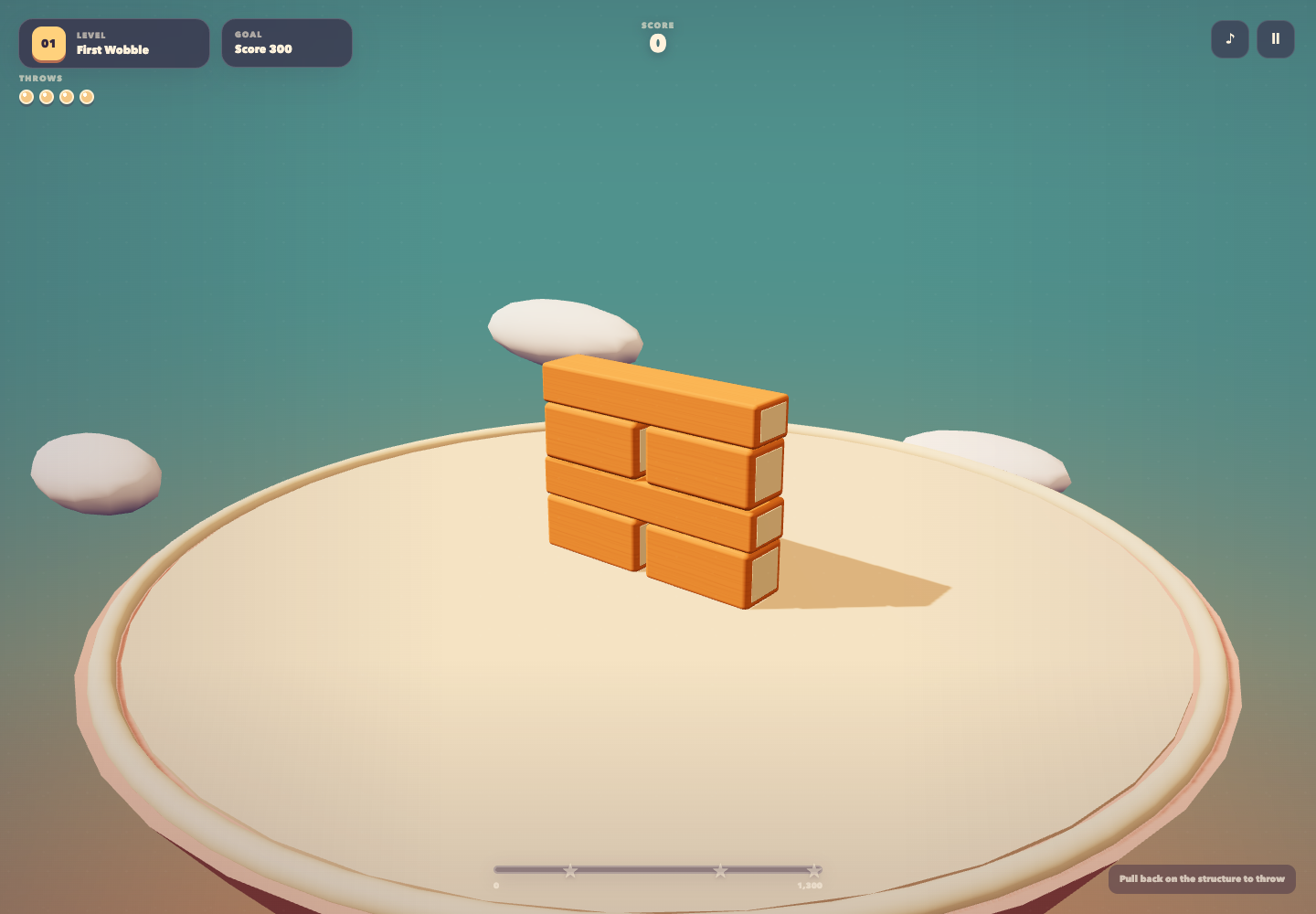
Twelve levels on a sunlit tabletop island. One ball, a limited number of throws, and five block types that make the tower argue back. Pull back, aim, let go.
Build a tower. Take one good shot. Enjoy the wreckage.
I have built the same game twice. Toppld came first, a small, calm thing about throwing a ball at a stack of blocks. Kinetix is what happened when I asked what the idea would look like if I stopped being careful with it. Both run in a browser tab. There is nothing to install and no account to make.
Twelve levels on a sunlit tabletop island. One ball, a limited number of throws, and five block types that make the tower argue back. Pull back, aim, let go.
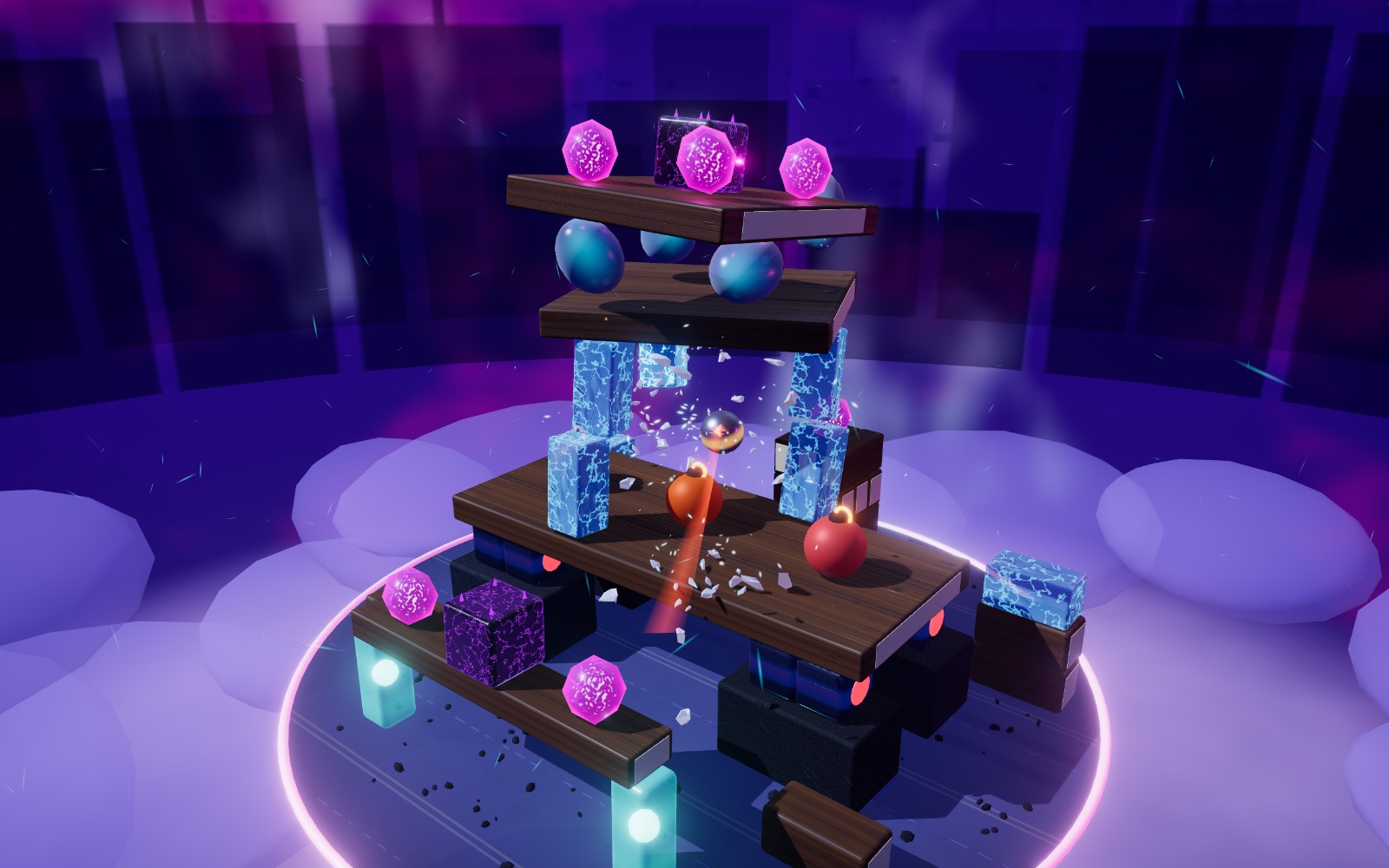
Twenty-four levels across three worlds, three ways to hit a structure, and nine block types that behave badly in nine different directions. Tilt your phone and the camera leans with you.
I used to love Boom Blox. The pitch fit in one sentence: throw a ball at a tower and enjoy the mess. It never made the jump off the Wii, and every few years I would remember how good that felt and find nothing to play instead.
So I built Toppld. Twelve levels, one throw verb, a soft pastel toy room, and just enough block variety that the last level is genuinely hard. It does exactly one thing and it does it well, which is the entire point of a first attempt.
Toppld answered the question I actually had. Kinetix is the follow-up question: what does this idea look like on hardware a Wii never imagined? A phone has a gyroscope, a touchscreen, and a GPU that will happily fracture a stone column into a dozen pieces without complaining.
So the throw became three verbs. Sling is the old drag-back shot. Grip pulls a block out of a stack like a Jenga piece, with time softening while you hold it. Pulse is a tap-fired bolt for the shot you cannot reach. Levels hand you a specific budget of each, so the puzzle is partly which tool you spend.
Lean is the one I keep showing people. Tilt or rotate the phone and the camera peeks around the structure, so you can see the gem hiding behind a stone screen without letting go of your aim. On a desktop the same code path follows your mouse. Shake the phone once per level and you get Aftershock, a ground tremor for when a tower is one nudge from falling.
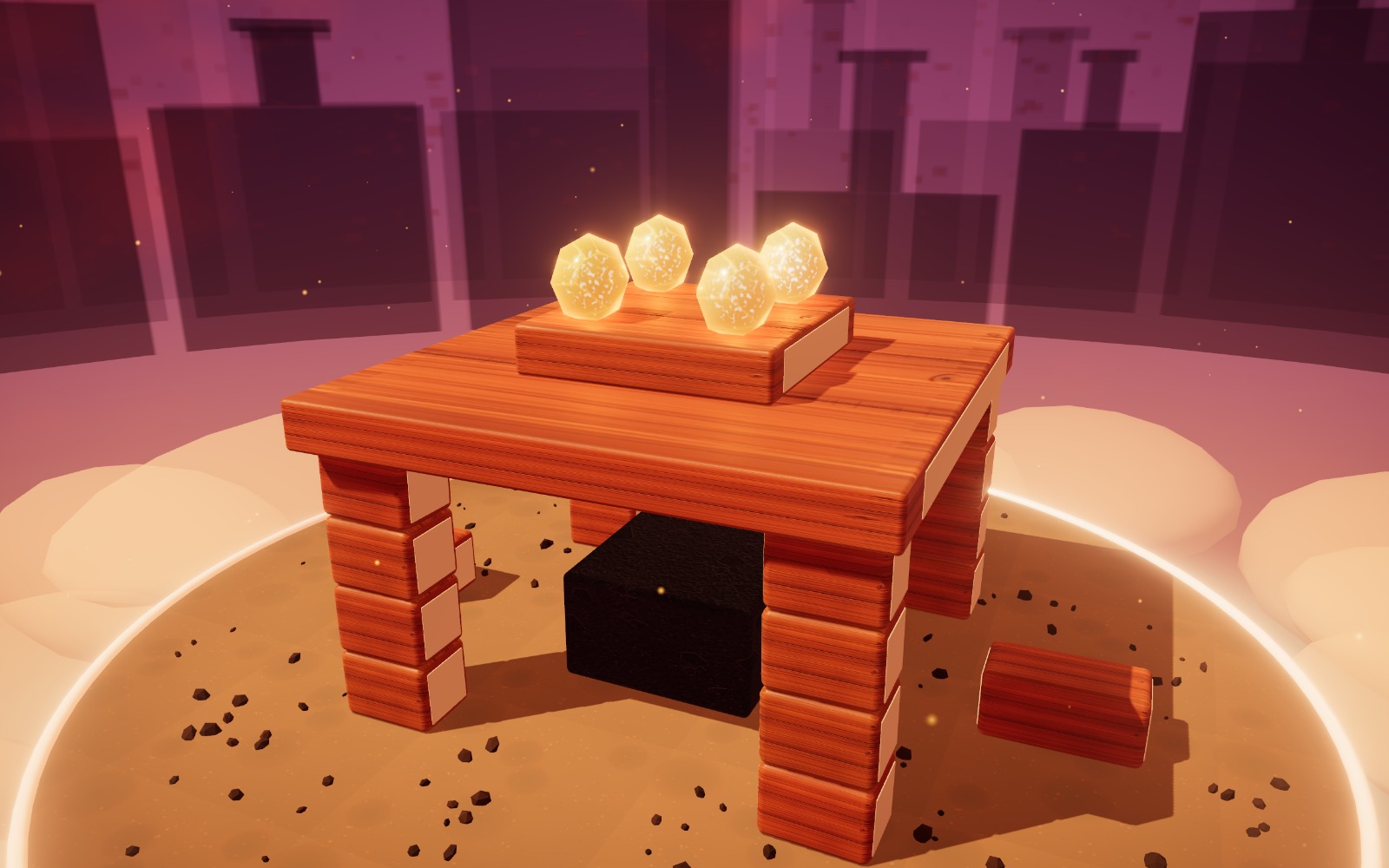
Blocks no longer just vanish. They fracture into chunks that get a brief real physics life and then freeze into rubble that stays on the deck for the rest of the level. Knock something off the edge and it punches a glowing scar through the cloud layer below. By the end of a big demolition the island looks like something happened there.
| Toppld | Kinetix | |
|---|---|---|
| Year | 2026 | 2026 |
| AI I built it with | ChatGPT | Claude |
| Levels | 12 | 24, across 3 worlds |
| Tools | 1 — Throw | 3 — Sling, Grip, Pulse |
| Block types | 5 | 9 |
| Motion controls | None | Lean (tilt the phone) and Aftershock (shake it) |
| Graphics | Three.js on WebGL | Three.js on WebGPU, with an automatic WebGL 2 fallback |
| Physics | Rapier | Rapier, plus blocks that fracture into persistent rubble |
| Multiplayer | None | Tumble Duel — pass the phone, two rulesets |
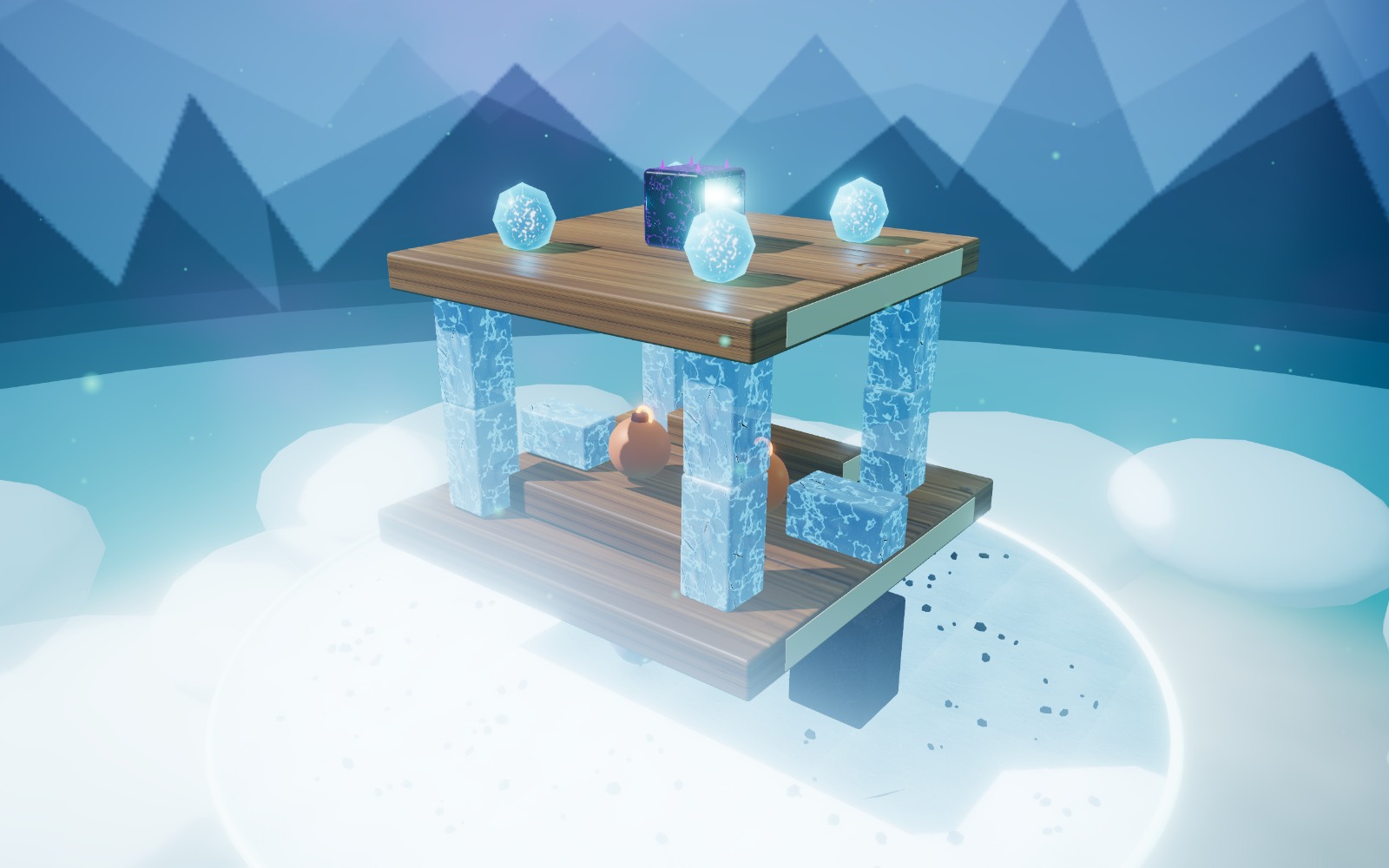
| Look | Pastel sky islands | Three biomes: Ember Yard, Frostline, Voltreach |
| Assets | All generated at runtime | All generated at runtime |
| To play | Open the page | Open the page |
Neither game ships a single model, texture, font file, or audio clip. The wood grain and the ice cracks are painted onto canvases at load time, the geometry is generated, and every clack, chime, and boom is synthesised in the browser. That is why both of these are just a link.
They work with a mouse and keyboard or a touchscreen, save your stars and unlocked levels locally, and run entirely on the page you are on.