Playable
White Steel
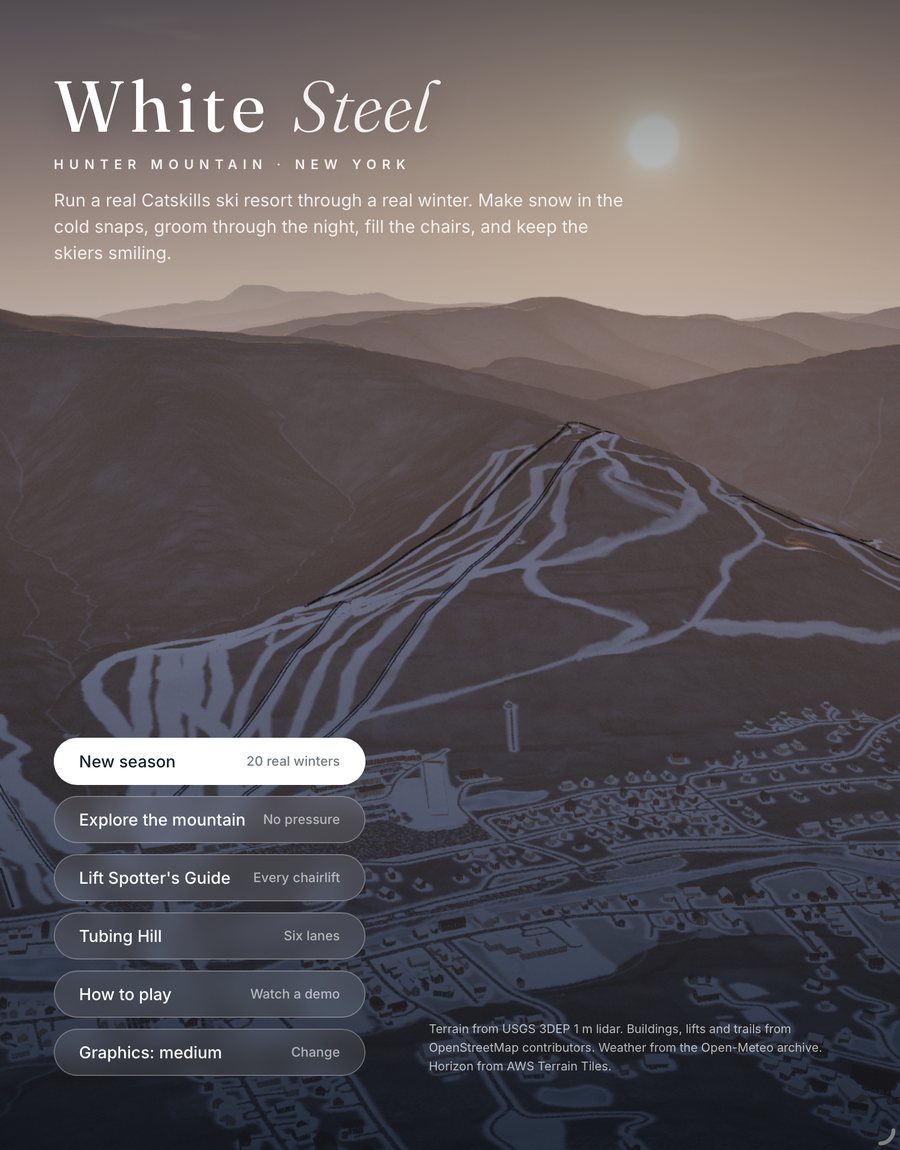
A ski resort game on the real Hunter Mountain: its lidar terrain, its lifts and trails from OpenStreetMap, and twenty real winters of weather.
The beta has what I'm testing now: a terrain park on Park Avenue that you build from jumps, rails and boxes and then ride on skis or a snowboard, plus a one-minute opening from a wild 1958 dawn to today, the Cat Barn, the winch cat on Racer's Edge, and Hunter's 1980 Olympic Snowcat 23.
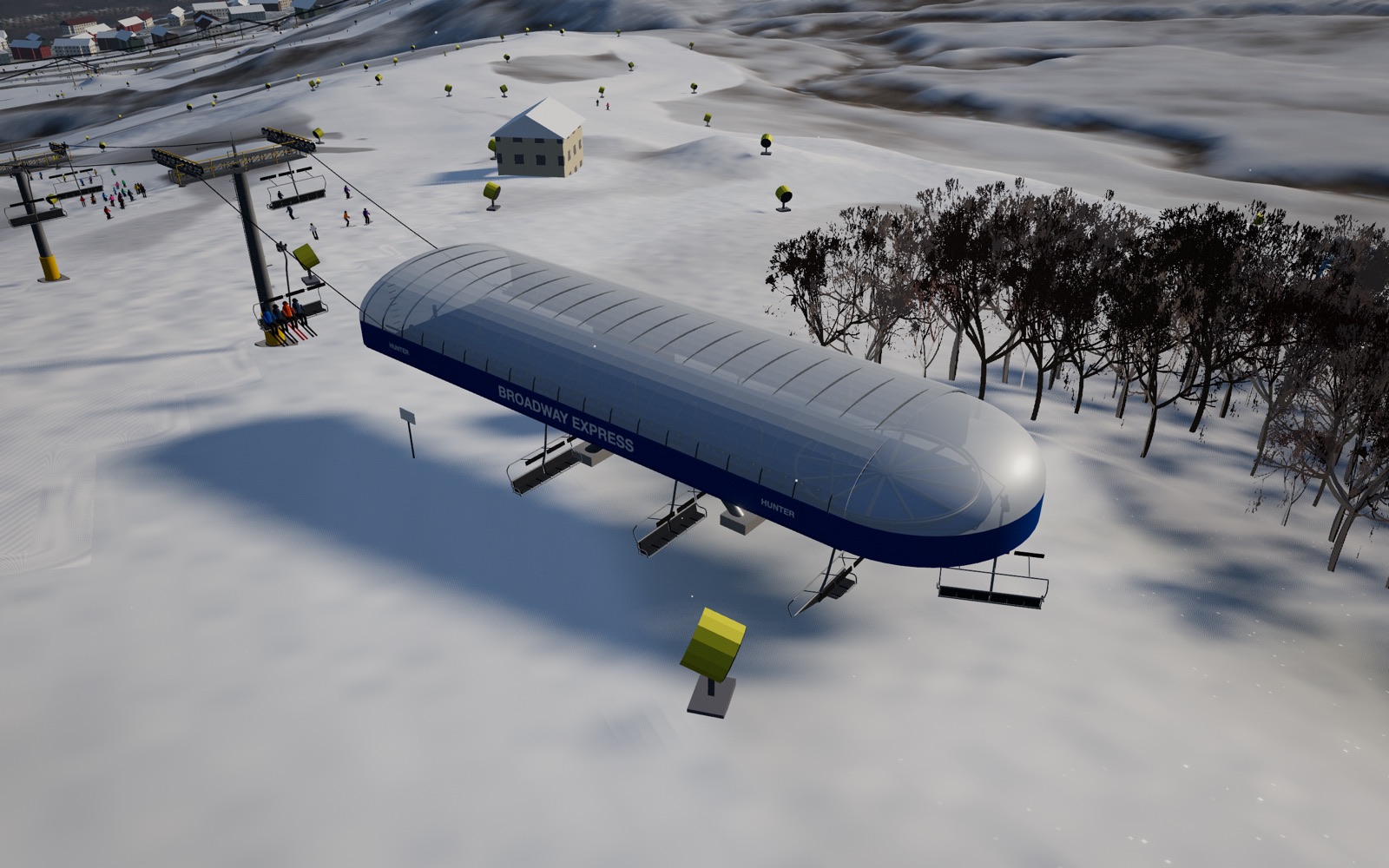
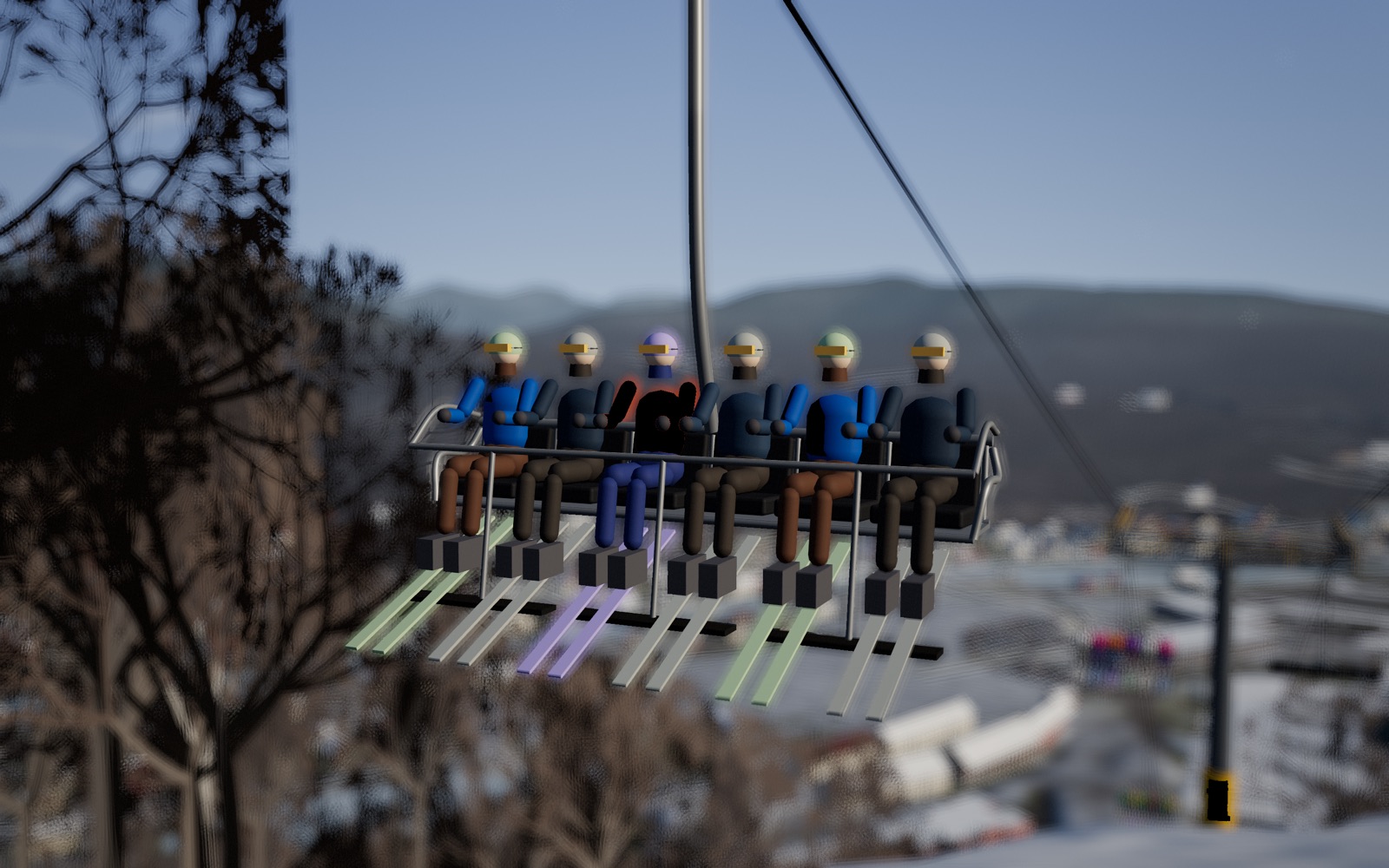
Broadway Express, modeled on its 2024 Leitner-Poma equipment
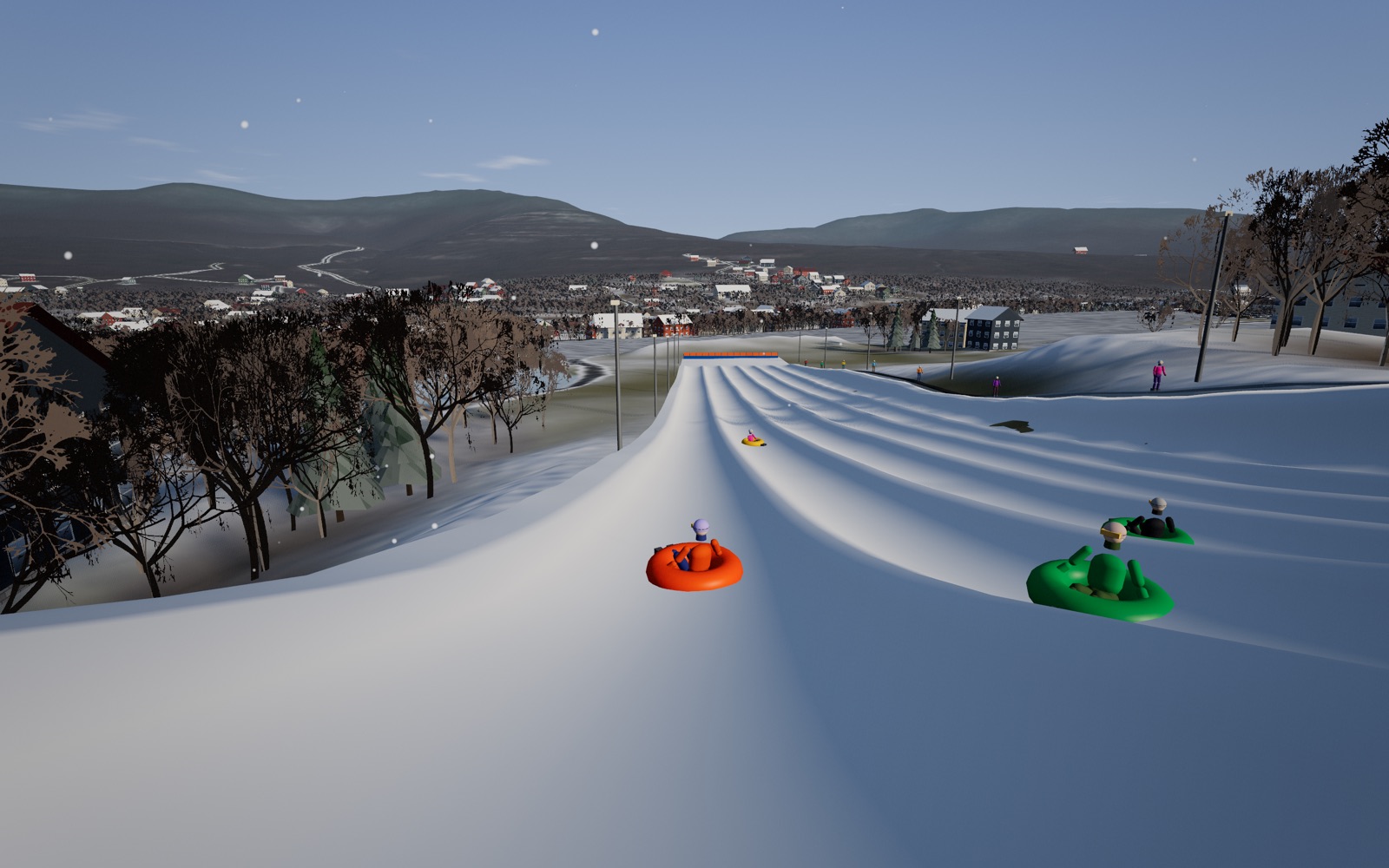
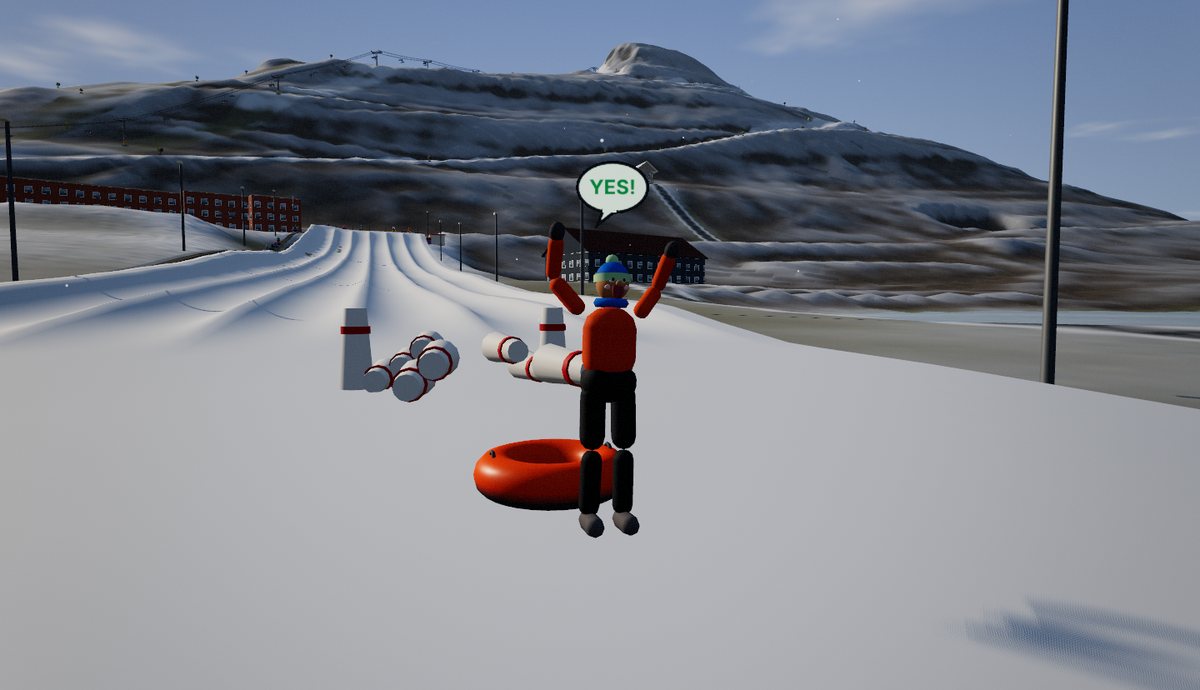
Photo mode on the Kaatskill Flyer, and a race on the Tubing Hill
The Story
My kids are obsessed with Hunter Mountain. We go as often as we can, and on the drive home they're already redesigning the place. More terrain parks. A gondola to the summit. Hot chocolate stations on every trail.
I've always loved tycoon games — the particular satisfaction of watching a spreadsheet turn into a functioning little world. So the pitch wrote itself: build the actual mountain, let them run it, see how long until they bankrupt the place.
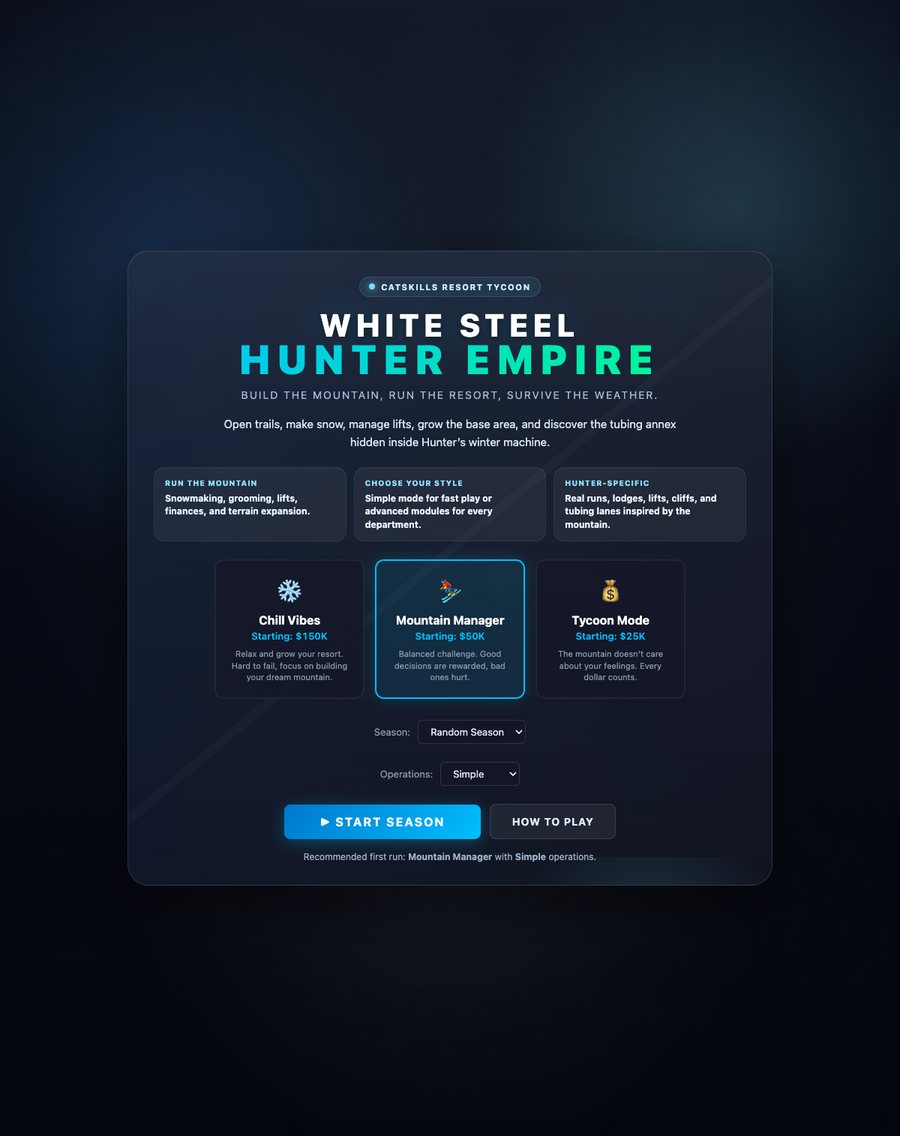
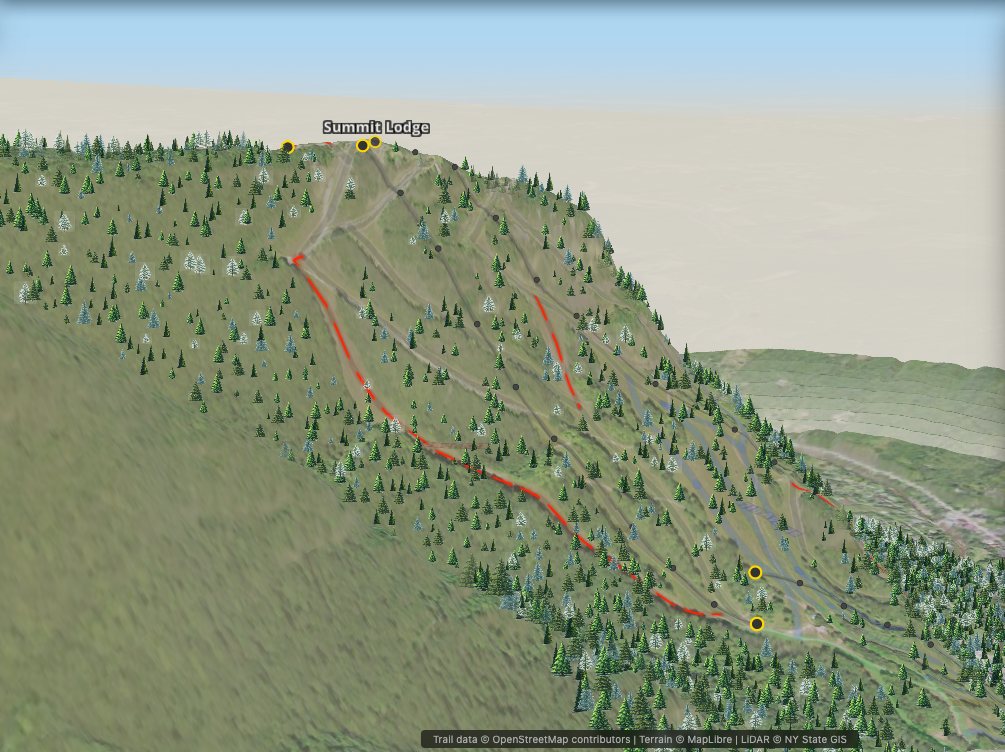
White Steel: Hunter Empire is a ski resort management game set on a 3D map of the real mountain. Lifts, trails, snowmaking, finances, guest satisfaction — the works. Your decisions affect everything from wait times to snow quality, and the weather doesn't care about your plans.
White Steel 2
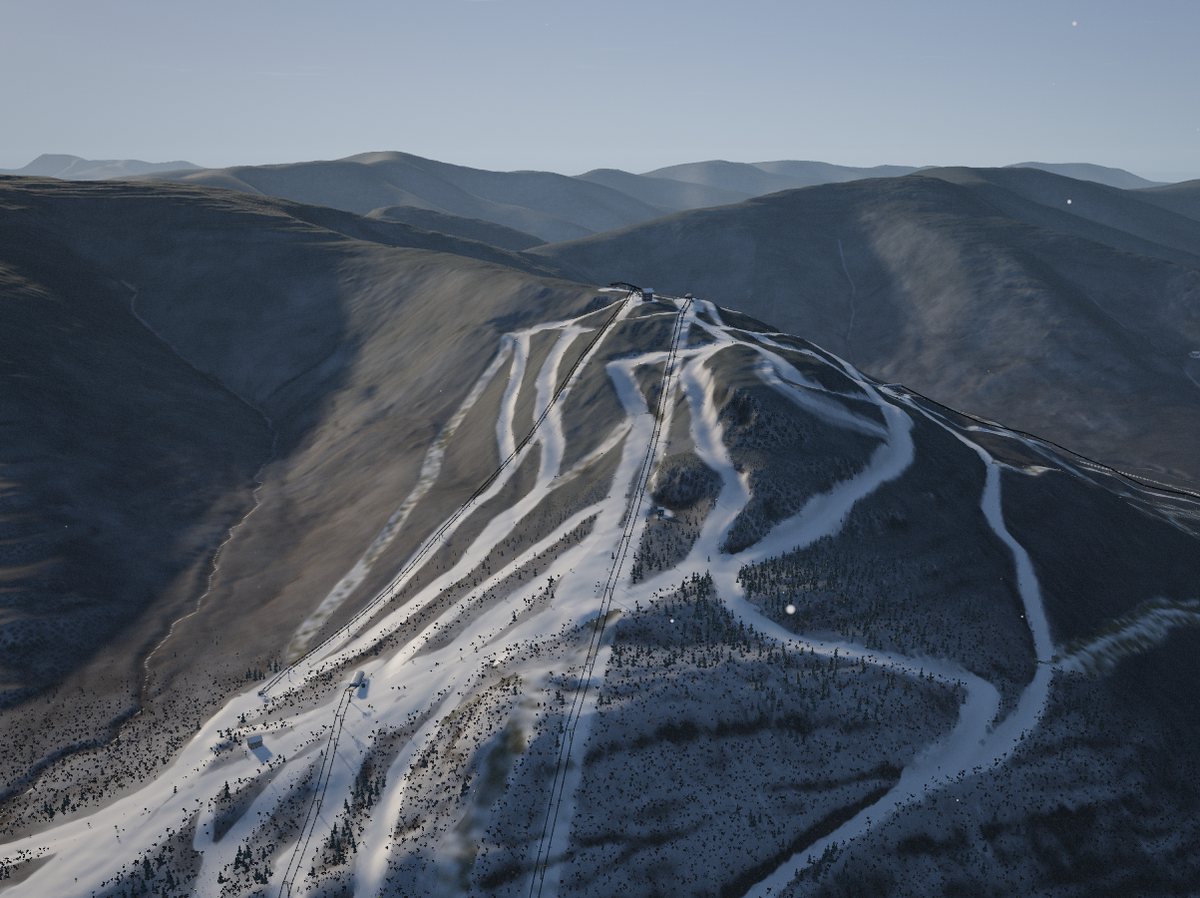
White Steel 2 is a ground-up rebuild in Three.js. The mountain is the USGS one-meter lidar survey, with the Catskills around it out to the horizon, and every trail, lift tower, building and parking lot sits where OpenStreetMap puts it. Each season replays a real winter from the weather archive, one day at a time.
You make snow when it's cold enough, groom at night and set ticket prices, and the guests tell you what they think of all of it. When you want to get out of the office you can ski any trail, drive a groomer, work the loading line or ride a chair to the top.
My kids love chairlifts, so the lifts got the most attention. All eight are modeled on the real equipment, from the 2024 Broadway Express to the 1972 H double with its hanging counterweight. You can run one from the operator's booth, collect stamps in a spotter's guide, or tear one out, order a new lift in your own colors and watch a heavy-lift helicopter fly in the towers.
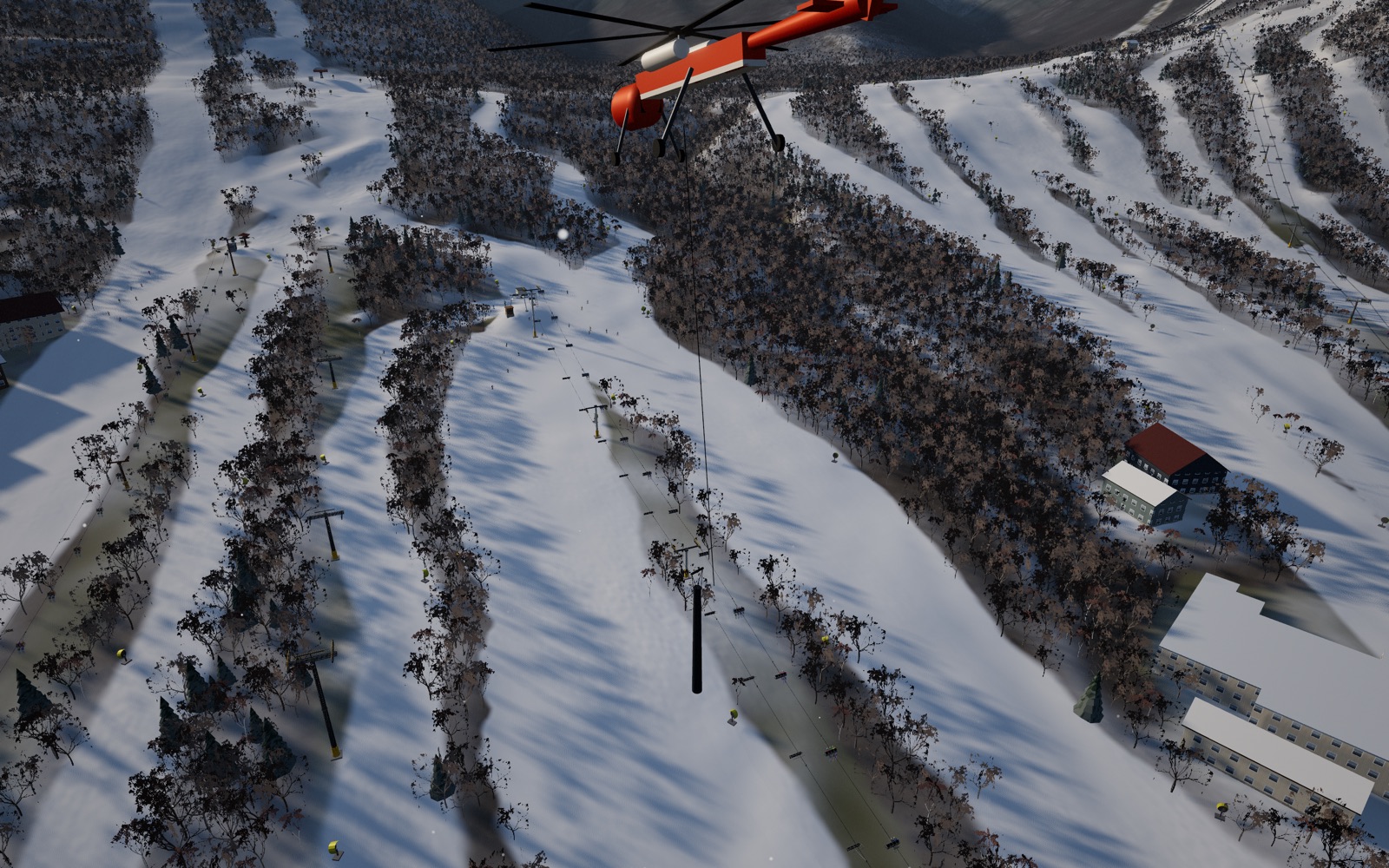
Flying a tower in for a replacement lift
The Real Mountain
USGS lidar at 4 m, a 33 km Catskills horizon, and OpenStreetMap trails, lifts, buildings and lots.
Real Winters
Twenty seasons of archived weather, 2004 to 2024. Snowpack, snowmaking and wind holds follow the actual days.
Real Lifts
Eight chairlifts built from their Leitner-Poma, Poma and Heron-Poma equipment, with detaching chairs and turning sheaves.
Hands On
Ski, groom, load chairs, run a lift from the booth, or take a photo with depth of field.
Build
Replace any chairlift with a new model and watch the towers go in one flight at a time.
Tubing Hill
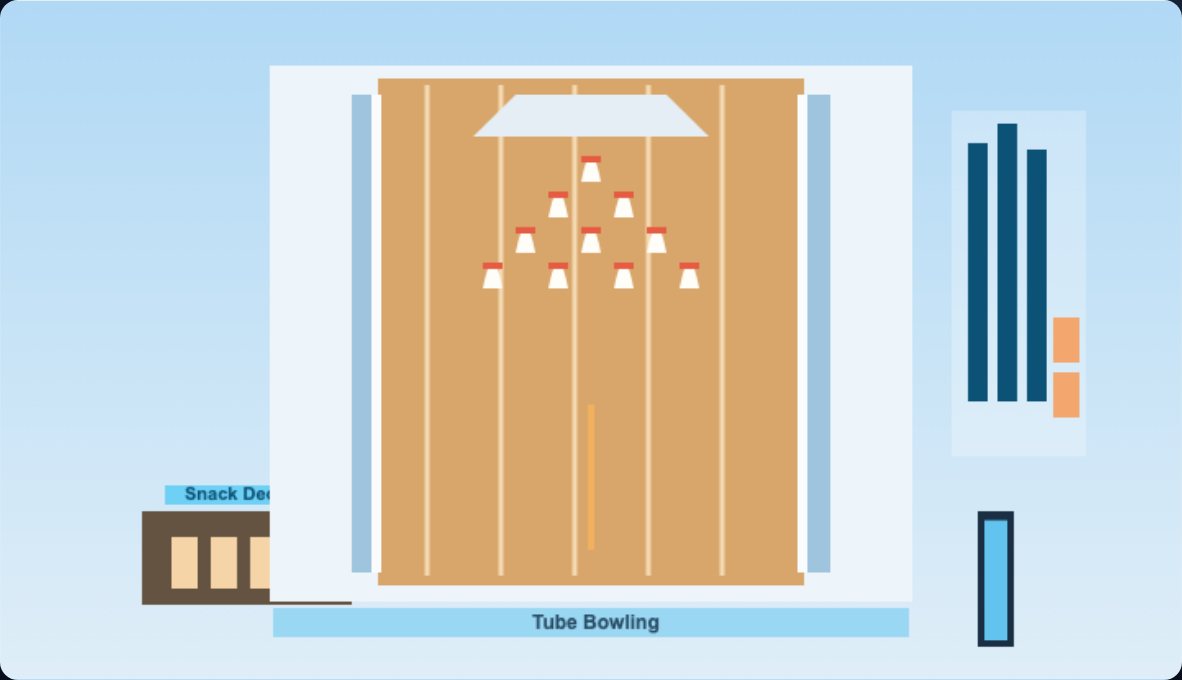
Six lanes on Hunter's real tubing run, each its own game, from a race to tube bowling.
Built with Claude
The first White Steel was a MapLibre proof of concept that I built with Claude one round at a time. For White Steel 2, Claude worked in Claude Code from design briefs we wrote together: it gathered the terrain, map and weather data, researched every lift, wrote the simulation and the renderer, and checked its own work with screenshots and tests. My job was direction, and playing it.